
Technical Analysis
Technical analysis means reading price charts to anticipate market moves.
 Featured
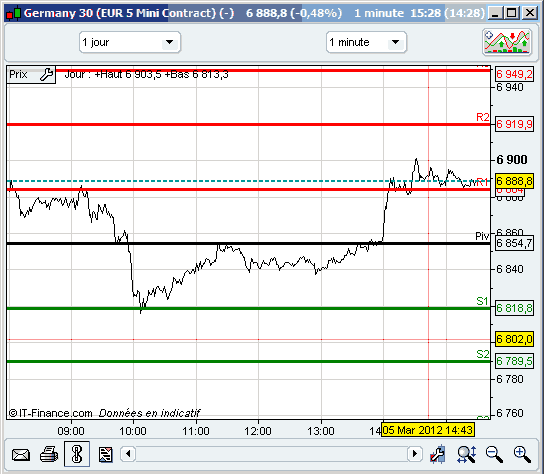
Pivot Points: A Classic and Effective Trading Technique
Pivot points are a classical intervention technique in the Stock Market. I like it for its simplicity and above all its effectiveness. Pivot points (PP), Resistance…
Read the articleAll articles
Most recentSections in this category
Go straight to the topic that interests you.
Technical Analysis
Candlesticks, support and resistance, volume, moving averages: it assumes that price action already reflects all available information, and that certain patterns repeat. This section covers both schools. Classical analysis first—chart patterns, RSI, MACD, Bollinger Bands, Fibonacci retracements. Then Smart Money Concepts—order blocks, fair value gaps, liquidity, killzones, and order flow reading, inherited from Wyckoff and popularized by the ICT approach. I approach it as an active trader since 1994, on the CME’s Nasdaq future (NQ): what holds up in a real session, what’s folklore, and why no indicator removes the need for a trading plan. Browse the articles to build your chart reading, from the single candle to the full market structure.
Stay in touch with the markets and the world.
Receive my analyses by email, and join the discussion with the forum community.