
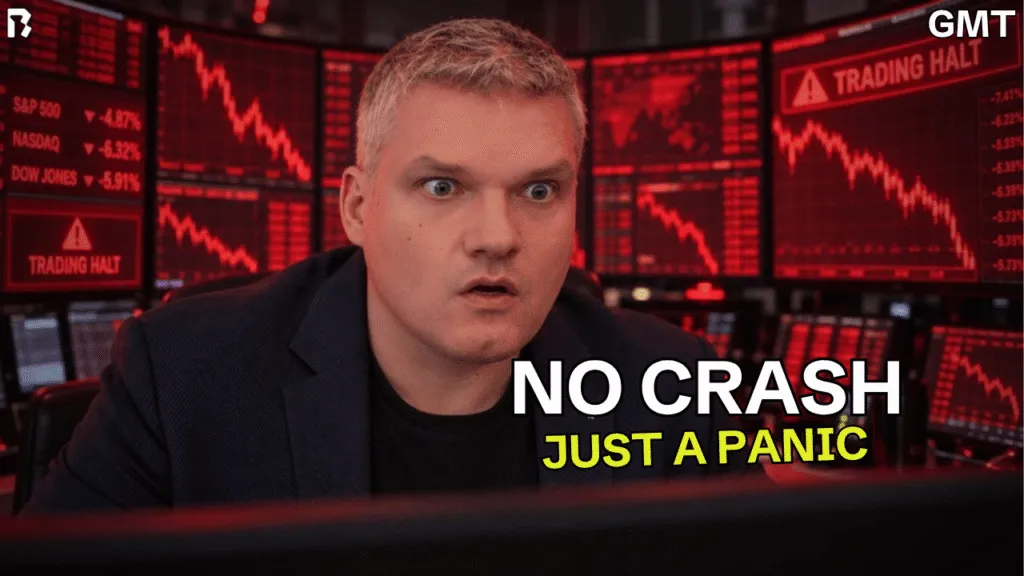

The Nasdaq just dropped by more than 6%. Basically, we are bordering on a latent crash in the artificial intelligence sector. I’ve been trading for thirty years. Watching everyone panic while I sip my green tea… I’ve seen it all before. I’ll explain exactly why the markets are spiraling. Above all, I’ll share how I protect my capital with strict discipline amidst the surrounding chaos.
By playing this video, you accept YouTube’s cookies.

The Context Behind This Unexpected Drop
Things escalated pretty quickly. With a 10% loss across the indices in just a few days, things are getting shaky. Some tech stocks have even shed 20 to 25%. Confidence is wavering.
By the way, there’s always a trigger event that bursts a stock market bubble. Here, the spark comes from the American political scene. Investors dread the consequences of a Democratic victory in Congress. They fear potential restrictive or anti-AI laws. Highly polluting data centers and massive job cuts are facing heavy criticism. Consequently, Wall Street got spooked by these looming regulations. The Dow Jones, even though it has very little exposure to AI, took a nosedive. It got slapped with a nearly 3,600-point total sell-off.
The Asymmetry of Assets During a Crisis
When tension rises, it’s fascinating to watch how the markets react.
- The CAC 40 stands out: Ironically, our French index ended up in the green. Why? Because it has almost zero exposure to AI. When technology breeds fear, the CAC 40 is highly reassuring. The French AI company Mistral is suffering from a slight, costly technological lag. In the United States, Anthropic and its tool Claude are also slowing down. In fact, they might postpone their IPO due to a lack of cash flow.
- Bitcoin is not a safe haven: The facts speak for themselves. When the markets drop by 5%, Bitcoin loses 8%. I used to mine Bitcoin in its early days around 2011, and I love the project. But it’s not some magic safe-haven asset. It’s just a traditional, highly volatile asset.
- Signs of extreme panic: The panic is very real. Over in Seoul, they had to hit the circuit breakers. That implies totally halting stock exchange trading for 20 minutes. The objective? To allow humans and algorithms alike to regain their composure.
My Mental Framework for Navigating the Storm
When the markets get out of control, I adjust my approach. Honestly, the crowd often displays a herd mentality. Here is my action plan:
- I watch for closing anomalies: After 10:00 PM, a sudden 100-point drop is decisive. It indicates the automatic, mechanical triggering of stop losses. In my view, this is a massive signal of extreme nervousness.
- I put technical analysis on pause: Right now, no support line is really holding. The usual levels will all be blown away. It’s pointless to try applying probabilities to a hysterical market.
- I drastically reduce my volume: Instead of thirty or so trades, I execute very few. Most importantly, these are highly nervous, ultra-short operations. They last anywhere from five seconds to a maximum of one minute.
This entire mental process reminds me of binge-watching a good Netflix series. The best move is to stay glued to the screen, sunk deep into your sofa, but without getting agitated.
What You Need to Keep in Mind
Mind you, we aren’t experiencing the ultimate financial collapse. Today, we are just talking about a standard 10% correction. A true historical crash wipes out roughly 80 to 90% of value. I actually talk about this in a directory of stock market crashes available on my blog. Just remember that the recovery time varies drastically depending on the era. The S&P 500 can recover in six months on average. As for the Nasdaq, it took about 15 years after the 2000s.
Conclusion
In short, the sheer momentum of the current panic demands true investor discipline. Refuse to blindly follow other people’s signals. Think for yourself, take a step back, and whatever you do, don’t drain yourself emotionally. Sometimes, the most profitable move is simply to shut down your screens. Take a nice, restful weekend instead, and let the storm blow over.
Benoist Rousseau has been a trader since 1994 and is a member of the Chicago Mercantile Exchange (CME) and the Chicago Board of Trade (CBOT), where he holds two individual member seats. Founder of Andlil.com in 2010 and author of Devenez Trader Pro (2016), he has trained hundreds of traders at his trading school. In the “Market Session Analysis” section, he prepares the trading session ahead of the US open: key futures levels, gold, oil, and the economic calendar, without signals or promises.
Discover my backgroundThe complete course Free
Trading starts with the right tools.
- The complete course on the platform
- My Charts & Workspaces: exclusive access to my custom indicators, templates, and settings
- Guided configuration, step by step
When you are ready To go further
Courses, seminars, webinar, and private coaching. I accompany you personally.
Discover the School